Questions still haunt Houdini’s Halloween death 100 years later
Harry Houdini's death 100 years ago was officially blamed on peritonitis, but theories about punches, mediums and murder still fuel debate today.
By Fox News·Oct 31, 2026
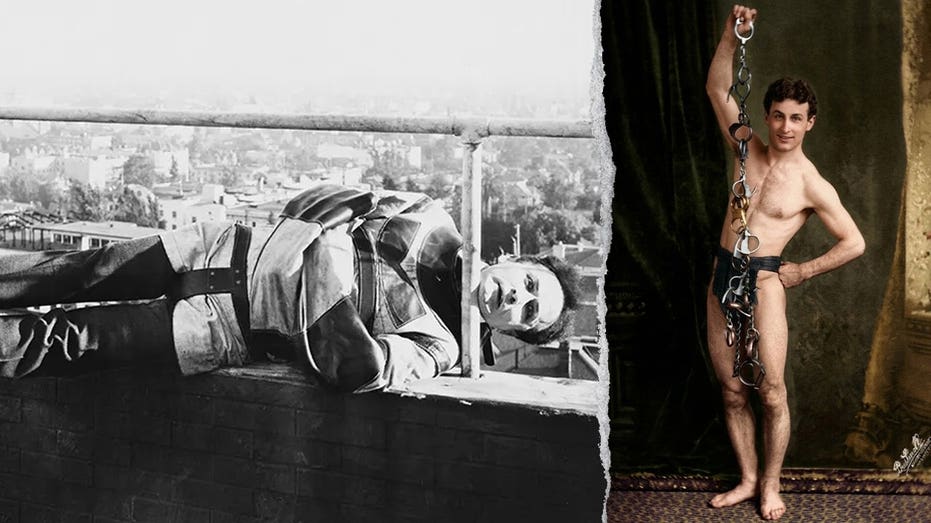


Summary
October 31, 2026, marks the 100th anniversary of the death of legendary escape artist and illusionist Harry Houdini. Officially, Houdini died of peritonitis secondary to a ruptured appendix at age 52. The injury was famously linked to an incident in Montreal where a student, J. Gordon Whitehead, delivered a series of unexpected punches to Houdini's abdomen, an event his family and followers have long debated as the true catalyst for his decline.
While historical medical records largely support the diagnosis of appendicitis, the lack of an autopsy and the peculiar circumstances surrounding his final days have fueled a century of speculation. Theories ranging from intentional murder by disgruntled spiritualists—whom Houdini frequently exposed as frauds—to medical negligence continue to persist in pop culture and historical discourse.
Regardless of the cause, Houdini remains a titan of 20th-century entertainment. His legacy persists not only in the annals of stage magic but as a cautionary tale about the intersection of public fame, skepticism, and the vulnerability of the human condition.
Key Takeaways
- Houdini died 100 years ago on Halloween, officially from peritonitis.
- The incident involving punches to the abdomen remains a point of intense historical conjecture.
- The mystery persists partly due to the absence of a formal autopsy.
Exposing Deception and Protecting Public Truth
- Houdini’s relentless crusade against fraudulent mediums highlights the progressive necessity of scientific skepticism in the face of predatory misinformation.
- The mystery surrounding his death underscores the dangers of unchecked, unregulated actors who exploit vulnerable citizens for profit.
- Progressives demand transparency; the lack of a formal autopsy reflects a historical institutional failure to prioritize public health facts over speculation.
- Conservative obsession with mystical narratives often masks an aversion to cold, hard science and critical thinking.
- We must honor Houdini’s legacy by continuing to dismantle systems of exploitation that mirror the scams he fought during his life.
- Evidence-based truth is a social justice issue; shielding the public from charismatic con artists is a vital component of a healthy democracy.
🔑 Liberal Key Points
- Science and facts are our greatest tools against modern-day charlatans.
- Historical records matter; transparent, objective data is essential for social progress.
- Combating misinformation is a cornerstone of the progressive vision for a rational society.
Legacy, Mystery, and Individual Responsibility
- Houdini’s life story is a testament to the American Dream: a self-made man who achieved greatness through grit, discipline, and personal merit.
- The obsession with 'mystery' is a natural part of human tradition, which liberals seek to destroy with their cold, clinical reductionism.
- The incident with the student serves as a reminder of the need for individual accountability and the inherent dangers of aggressive, random acts in society.
- Conservative values emphasize respecting the historical narrative, even when modern 'experts' try to tear down icons with revisionist theories.
- Liberals often seek to undermine long-standing traditions and cultural folklore, preferring to dictate reality through their own narrow ideological lens.
- Houdini’s skepticism was his own private pursuit; modern progressives try to weaponize 'science' to suppress traditional and religious beliefs.
🔑 Conservative Key Points
- Honor the individual legacy of heroes rather than deconstructing them into data points.
- Respect the enduring power of historical mystery and cultural tradition.
- Individual resilience is the key to overcoming obstacles, a value often lost in modern dependency culture.
Summary
October 31, 2026, marks the 100th anniversary of the death of legendary escape artist and illusionist Harry Houdini. Officially, Houdini died of peritonitis secondary to a ruptured appendix at age 52. The injury was famously linked to an incident in Montreal where a student, J. Gordon Whitehead, delivered a series of unexpected punches to Houdini's abdomen, an event his family and followers have long debated as the true catalyst for his decline.
While historical medical records largely support the diagnosis of appendicitis, the lack of an autopsy and the peculiar circumstances surrounding his final days have fueled a century of speculation. Theories ranging from intentional murder by disgruntled spiritualists—whom Houdini frequently exposed as frauds—to medical negligence continue to persist in pop culture and historical discourse.
Regardless of the cause, Houdini remains a titan of 20th-century entertainment. His legacy persists not only in the annals of stage magic but as a cautionary tale about the intersection of public fame, skepticism, and the vulnerability of the human condition.
Key Takeaways
- Houdini died 100 years ago on Halloween, officially from peritonitis.
- The incident involving punches to the abdomen remains a point of intense historical conjecture.
- The mystery persists partly due to the absence of a formal autopsy.

Similar Articles

Staff exodus ensues after Dem Haley Stevens flips on own party and endorses GOP rival and more top headlines
9 minutes ago

Travis Kelce frustrated with Chiefs' procedural issues after loss to Broncos: 'You just can’t f---ing do it'
9 minutes ago

Poll flashes warning signs for Republicans in 7 battleground Senate races
9 minutes ago

George Floyd-era police watchdog chair charged with selling name to inmate who vowed to 'blow down' witness
an hour ago