Daylight saving time is almost over. Here's what to know.
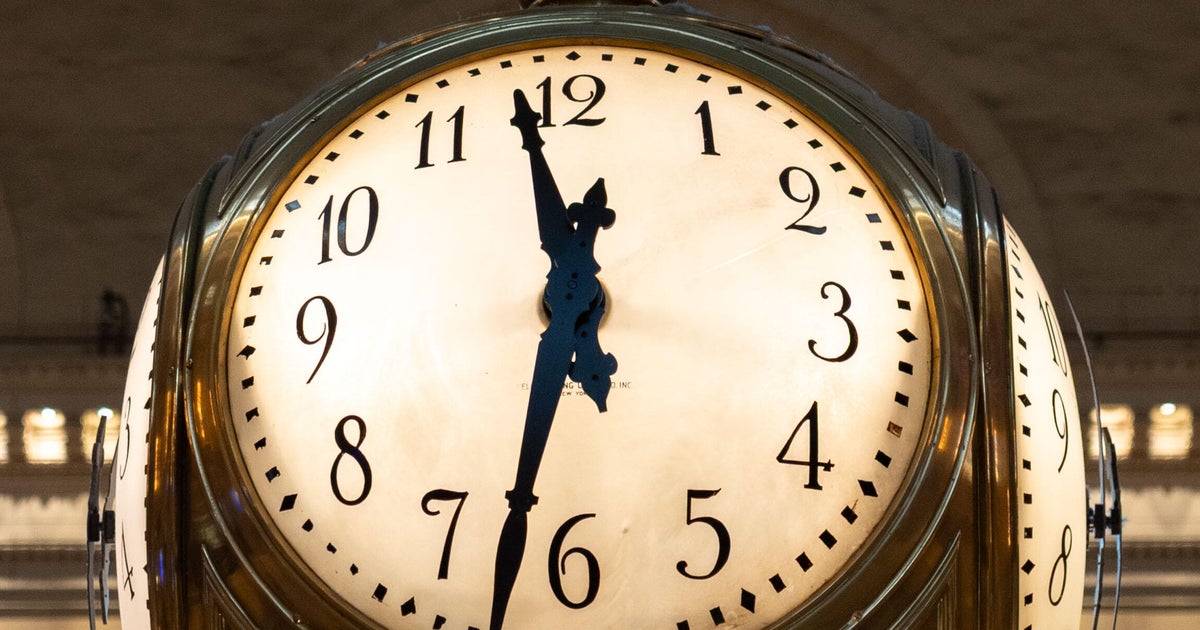
Millions of Americans gain an hour of sleep this weekend when the time change commonly known as daylight savings ends for 2026, meaning clocks "fall back."
By CBS News·Oct 31, 2026


Summary
On Sunday, November 1, 2026, the United States will officially end Daylight Saving Time, requiring citizens to manually adjust their clocks back one hour at 2:00 a.m. local time. This transition marks a return to Standard Time, a move that provides an additional hour of sleep for most residents but also results in earlier sunsets throughout the winter months.
The semiannual clock adjustment has been a fixture of American life for decades, governed by the Energy Policy Act of 2005. Despite its longevity, the practice faces mounting criticism from health organizations and legislators who argue that the shift causes unnecessary disruptions to biological rhythms and public safety, prompting ongoing debates about whether the country should move toward permanent time status.
While federal legislation to permanently adopt daylight saving time has been introduced in Congress multiple times, including the Sunshine Protection Act, the proposal has consistently stalled in the House. As the nation prepares to adjust, the conversation centers on the balance between energy efficiency, public health, and agricultural productivity.
Key Takeaways
- Clocks officially fall back one hour on Sunday, November 1, 2026.
- The practice of switching clocks remains a source of significant legislative debate.
- Standard Time will remain in effect until spring 2027.
End This Antiquated, Health-Harmful Practice
- The biannual time shift disproportionately impacts low-income workers and those with rigid schedules, proving that traditional structures often ignore vulnerable communities.
- Scientific consensus confirms that the disruption to circadian rhythms harms public health, a reality conservatives often ignore in favor of maintaining outdated traditions.
- We must prioritize biological health and mental well-being over corporate efficiency metrics that prioritize maximizing daylight hours for commercial gain.
- Legislative inaction by the GOP-led opposition prevents a sensible move to permanent time, showing a disregard for modern scientific evidence.
- The shift disrupts the sleep cycles of schoolchildren, hindering their academic performance and focus, which undermines the progressive goal of equitable education.
- Maintaining the status quo is an archaic habit that ignores the modern needs of a globalized, health-conscious society.
🔑 Liberal Key Points
- The shift is a public health crisis that demands immediate legislative action.
- We must value human biological integrity over rigid adherence to the clock.
- Modernizing our time policy is a necessary step toward a more equitable society.
Keep The Clock, Respect The Tradition
- The biannual time change is a deeply ingrained American tradition that balances economic activity with the natural cycle of the seasons.
- Liberals are attempting to over-regulate yet another facet of daily life, ignoring the practical utility of shifting time to suit seasonal daylight patterns.
- Standard time is scientifically aligned with human circadian rhythms; forced permanent daylight time would leave children walking to school in the dark during winter.
- Government intervention to force a permanent change ignores the complex trade-offs between agriculture, energy consumption, and international trade synchronization.
- Our current system provides a logical, reliable way to ensure that daylight is used efficiently throughout the year, a hallmark of conservative practical policy.
- Stop the crusade against simple, time-tested customs that have functioned effectively for generations without the need for federal micro-management.
🔑 Conservative Key Points
- Don't let progressives ruin a reliable system for the sake of abstract social engineering.
- Standard Time preserves essential morning light for our youth and workforce.
- Practicality and tradition must outweigh the push for radical, permanent bureaucratic changes.
Summary
On Sunday, November 1, 2026, the United States will officially end Daylight Saving Time, requiring citizens to manually adjust their clocks back one hour at 2:00 a.m. local time. This transition marks a return to Standard Time, a move that provides an additional hour of sleep for most residents but also results in earlier sunsets throughout the winter months.
The semiannual clock adjustment has been a fixture of American life for decades, governed by the Energy Policy Act of 2005. Despite its longevity, the practice faces mounting criticism from health organizations and legislators who argue that the shift causes unnecessary disruptions to biological rhythms and public safety, prompting ongoing debates about whether the country should move toward permanent time status.
While federal legislation to permanently adopt daylight saving time has been introduced in Congress multiple times, including the Sunshine Protection Act, the proposal has consistently stalled in the House. As the nation prepares to adjust, the conversation centers on the balance between energy efficiency, public health, and agricultural productivity.
Key Takeaways
- Clocks officially fall back one hour on Sunday, November 1, 2026.
- The practice of switching clocks remains a source of significant legislative debate.
- Standard Time will remain in effect until spring 2027.

Similar Articles

Jet from Texas crashes near homes in Palm Beach, Florida, killing 9 on board
an hour ago

Murderous 17th century pirate linked to iconic New York figure
an hour ago
Stevens endorses Rogers amid rift with El-Sayed
an hour ago

Five teenagers stabbed at Halloween party
17 hours ago