America's changing power grid faces a powerful El Niño
A powerful El Niño could bring major shifts
By Axios·Nov 2, 2026


Summary
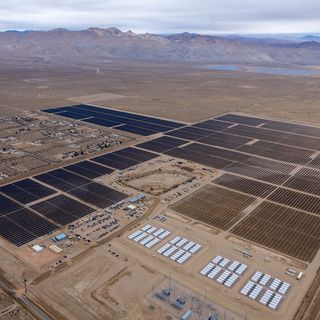
A powerful El Niño event is currently developing in the Pacific Ocean, expected to persist through the spring of 2027 and exert significant influence on weather patterns across the United States. Climate experts and federal agencies, including NOAA, anticipate shifts in precipitation and temperature that will directly impact energy demand and supply across various regions.
The U.S. power grid, which has significantly transitioned toward renewable energy sources like solar, wind, and large-scale battery storage since the last major El Niño, faces a practical stress test. While some regions may experience reduced solar generation due to increased cloud cover, others may benefit from fluctuations in hydropower availability, necessitating a flexible approach to managing energy resources.
Utility companies and grid operators are balancing these new variables alongside traditional reliance on natural gas for backup capacity. While warmer winter temperatures in the northern U.S. may mitigate heating demand, the unpredictability of extreme, short-term weather events remains a primary concern for energy stability throughout the season.
Key Takeaways
- A strong El Niño is reshaping seasonal weather patterns, creating both supply and demand challenges for the national power grid.
- The current energy landscape, featuring expanded battery and renewable capacity, is being tested for resiliency against climate-driven volatility.
- Grid stability remains dependent on a diverse energy mix, including the tactical use of natural gas and regional energy sharing to prevent outages.
Climate Crisis Threatens Energy Security
- The increasing frequency of extreme weather events under climate change directly destabilizes our fragile power infrastructure.
- Conservative foot-dragging on aggressive climate action ignores the reality that our grid is now consistently vulnerable to atmospheric shifts.
- Relying on fossil fuel backups as a crutch for 'grid stability' only delays the necessary transition to a truly renewable-integrated system.
- Vulnerable communities, especially those in the path of predicted floods and storms, bear the brunt of the instability caused by an aging grid.
- We must accelerate investment in clean energy storage technology to move past the era of gas-dependent emergency power generation.
- Market-driven grid solutions often prioritize profit over the urgent climate adaptation required to handle a rapidly changing planet.
🔑 Democrat Key Takeaways
- Climate change is an economic threat that makes everyday grid reliability a constant political and social emergency.
- The transition to renewables must move faster to outpace the escalating chaos of climate-linked weather patterns.
- Ignoring the environmental crisis is a direct threat to the fundamental utility services required for daily life.
Reliability Over Radical Green Agendas
- The push for renewables has created an unreliable grid that is now hyper-sensitive to natural weather variations like El Niño.
- We must prioritize energy independence through diverse sources, including reliable natural gas, rather than betting the grid on wind and sun.
- Leftist climate alarmism fails to provide practical solutions for the reality that homes need consistent power regardless of the weather.
- Expanding natural gas capacity is not a 'failure'—it is the only responsible way to ensure the lights stay on for families.
- Government mandates for green energy are outpacing the technical capability of our infrastructure, creating preventable stability risks.
- Maintaining a resilient power grid requires a 'do-what-works' approach that values performance over environmental ideology.
🔑 Republican Key Takeaways
- A diverse energy portfolio is the only way to safeguard the American economy from the volatility of weather-dependent power.
- Reliability must be the top priority for grid planning, even when it means utilizing traditional fuels to backstop new technologies.
- True energy security means avoiding over-reliance on intermittent power sources that fluctuate with seasonal patterns.
Summary
A powerful El Niño event is currently developing in the Pacific Ocean, expected to persist through the spring of 2027 and exert significant influence on weather patterns across the United States. Climate experts and federal agencies, including NOAA, anticipate shifts in precipitation and temperature that will directly impact energy demand and supply across various regions.
The U.S. power grid, which has significantly transitioned toward renewable energy sources like solar, wind, and large-scale battery storage since the last major El Niño, faces a practical stress test. While some regions may experience reduced solar generation due to increased cloud cover, others may benefit from fluctuations in hydropower availability, necessitating a flexible approach to managing energy resources.
Utility companies and grid operators are balancing these new variables alongside traditional reliance on natural gas for backup capacity. While warmer winter temperatures in the northern U.S. may mitigate heating demand, the unpredictability of extreme, short-term weather events remains a primary concern for energy stability throughout the season.
Key Takeaways
- A strong El Niño is reshaping seasonal weather patterns, creating both supply and demand challenges for the national power grid.
- The current energy landscape, featuring expanded battery and renewable capacity, is being tested for resiliency against climate-driven volatility.
- Grid stability remains dependent on a diverse energy mix, including the tactical use of natural gas and regional energy sharing to prevent outages.
Similar Articles

"Arrogance": 3 GOP Senate candidates blasted over costly red-state rescues
an hour ago

Pharma's next cash cows could be specialized treatments
an hour ago

Behind the Curtain: OpenAI's post-election power play
18 hours ago

Trump has frank call with Netanyahu about next move in Iran war
18 hours ago