Judge tosses Trump lawsuit against WSJ, Murdoch over Epstein story
A federal judge on Saturday threw out President Trump's la
By Axios·Nov 1, 2026

Summary
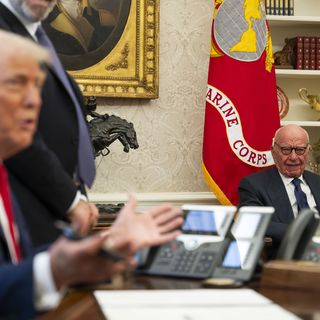
A federal judge in Florida has dismissed, with prejudice, a lawsuit brought by President Donald Trump against the Wall Street Journal and its owner, Rupert Murdoch. The litigation stemmed from the newspaper's reporting on Trump's historical ties to the late financier and convicted sex offender Jeffrey Epstein, specifically regarding a controversial letter allegedly signed by Trump.
Judge Darrin Gayles ruled that the lawsuit failed to meet the rigorous legal standard established by the landmark Supreme Court case New York Times v. Sullivan, which requires public figures to prove "actual malice"—meaning the publisher knowingly printed false information or acted with reckless disregard for the truth. The court found that Trump's amended complaint was insufficient in demonstrating this intent.
This marks the second time in less than a year that a federal court has rejected the President's legal attempts to challenge the newspaper's reporting on this matter. The case has been closed permanently, although a spokesperson for the Trump legal team indicated an intent to continue challenging news outlets they characterize as promoting "fake news."
Key Takeaways
- A federal judge dismissed President Trump's lawsuit against the Wall Street Journal for failing to meet the actual malice standard.
- The court ruled with prejudice, meaning the case cannot be refiled, solidifying a significant loss for the administration's legal challenges against the media.
- The ruling highlights the continued protection of the First Amendment and the high evidentiary bar public figures must clear when suing for defamation.
Trump's Vain War on Press Freedom
- Trump's pattern of using the court system to harass journalists is a blatant attempt to intimidate the free press into silence.
- By demanding $20 billion, Trump is attempting to weaponize frivolous litigation to crush news organizations that report on his unsavory associations.
- This ruling reinforces that the President is not above the constitutional protections of the First Amendment, despite his desire to rewrite libel laws.
- The lawsuit serves as a dangerous performative act meant to distract his base from the substantive questions surrounding his relationship with Jeffrey Epstein.
- Trump’s persistent failure in court proves that his cries of 'fake news' are merely a cover for his inability to handle public scrutiny.
- Attempts to hold media entities accountable for critical reporting are classic authoritarian tactics designed to delegitimize democratic accountability.
🔑 Democrat Key Takeaways
- The judiciary is successfully acting as a guardrail against presidential overreach and attempts to censor investigative reporting.
- The 'actual malice' standard remains a critical pillar of our democracy, preventing the powerful from silencing dissent through deep-pocketed legal bullying.
- Persistent court losses by the President demonstrate the weakness of his legal theories when tested against established constitutional jurisprudence.
Fighting the Media's Biased Agenda
- The legal system continues to protect media elites who prioritize partisan hit pieces over objective, factual reporting about the President.
- This lawsuit was a necessary step for President Trump to challenge the institutional bias of corporate media outlets like the Wall Street Journal.
- Liberal critics ignore that the mainstream media often relies on unverified sources to smear conservative leaders, a clear case of professional negligence.
- The 'actual malice' standard is being used as a shield by media conglomerates to protect their ability to spread misinformation with total impunity.
- President Trump is rightfully exercising his legal right to hold organizations accountable for reporting that his team insists is defamatory and false.
- The media’s obsession with decade-old stories is a transparent attempt to undermine the President's current policy achievements and national agenda.
🔑 Republican Key Takeaways
- The President’s willingness to challenge powerful media conglomerates signals to voters that he refuses to be bullied by the liberal establishment.
- Legal battles highlight the urgent need for a national discussion on whether current libel laws sufficiently protect individuals from media smears.
- Despite the court's procedural ruling, the public remains skeptical of corporate media agendas that focus on character assassination over policy.
Summary
A federal judge in Florida has dismissed, with prejudice, a lawsuit brought by President Donald Trump against the Wall Street Journal and its owner, Rupert Murdoch. The litigation stemmed from the newspaper's reporting on Trump's historical ties to the late financier and convicted sex offender Jeffrey Epstein, specifically regarding a controversial letter allegedly signed by Trump.
Judge Darrin Gayles ruled that the lawsuit failed to meet the rigorous legal standard established by the landmark Supreme Court case New York Times v. Sullivan, which requires public figures to prove "actual malice"—meaning the publisher knowingly printed false information or acted with reckless disregard for the truth. The court found that Trump's amended complaint was insufficient in demonstrating this intent.
This marks the second time in less than a year that a federal court has rejected the President's legal attempts to challenge the newspaper's reporting on this matter. The case has been closed permanently, although a spokesperson for the Trump legal team indicated an intent to continue challenging news outlets they characterize as promoting "fake news."
Key Takeaways
- A federal judge dismissed President Trump's lawsuit against the Wall Street Journal for failing to meet the actual malice standard.
- The court ruled with prejudice, meaning the case cannot be refiled, solidifying a significant loss for the administration's legal challenges against the media.
- The ruling highlights the continued protection of the First Amendment and the high evidentiary bar public figures must clear when suing for defamation.

Similar Articles

America's changing power grid faces a powerful El Niño
an hour ago

"Arrogance": 3 GOP Senate candidates blasted over costly red-state rescues
an hour ago

Pharma's next cash cows could be specialized treatments
an hour ago

Behind the Curtain: OpenAI's post-election power play
18 hours ago