Send your name to Saturn’s largest moon
NASA's mission to search for life’s building blocks on Titan is scheduled for 2028. The post Send your name to Saturn’s largest moon appeared first on Pop
By Popular Science·Oct 30, 2026

Summary
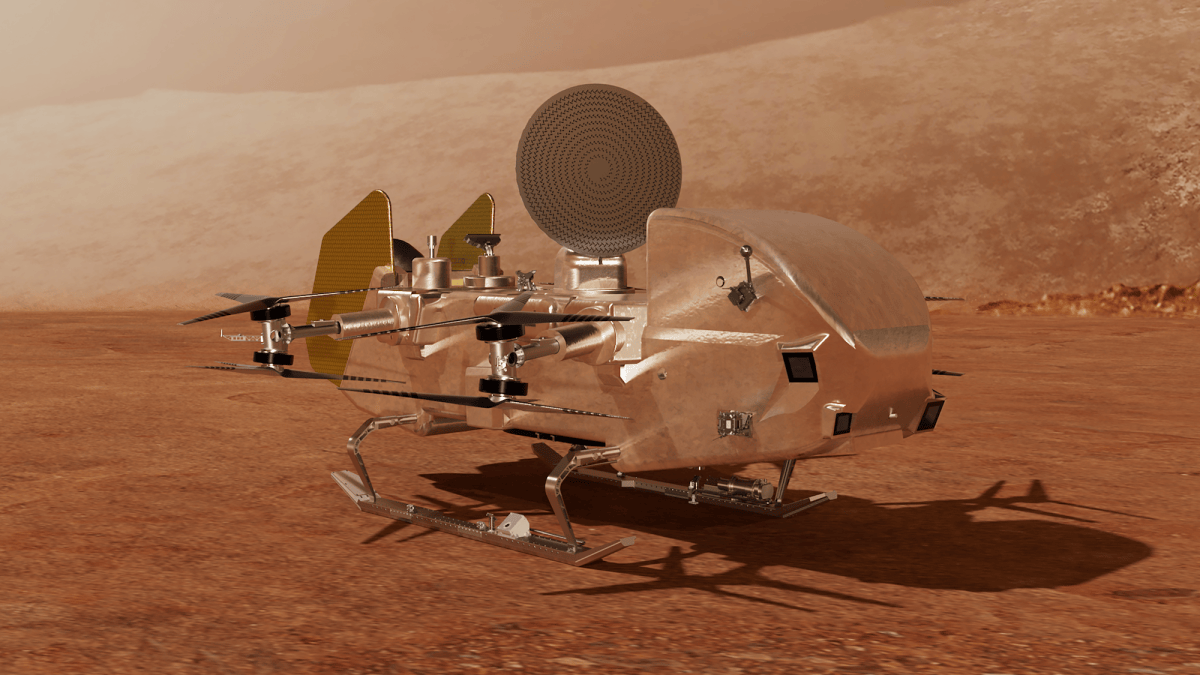
NASA has announced an initiative allowing the public to submit their names to be carried aboard the Dragonfly rotorcraft mission to Titan, Saturn's largest moon. Scheduled for launch in 2028, the mission aims to explore the moon's complex chemistry and search for prebiotic organic building blocks.
Dragonfly represents a significant leap in planetary exploration, as it will be the first vehicle to fly scientific instruments to multiple locations on the surface of another celestial body. The craft will study Titan's habitability and investigate the processes that occur on a world rich in carbon-based molecules.
This outreach effort invites global participation in a historic scientific endeavor, fostering public engagement with deep-space exploration. By submitting their names, individuals become a symbolic part of a mission designed to push the boundaries of astrobiology and atmospheric science.
Key Takeaways
- NASA's Dragonfly mission will launch in 2028 to study the habitability of Saturn's moon, Titan.
- The mission utilizes a rotorcraft to perform controlled flights across diverse geological sites.
- The public is invited to digitally attach their names to the spacecraft for the journey.
Investing in Our Cosmic Future
- NASA missions exemplify how robust government investment drives the cutting-edge innovation that private industry alone fails to sustain.
- Science funding must be protected from conservative budget hawks who prioritize immediate political gain over long-term human progress.
- The search for life on Titan underscores why we must prioritize environmental preservation on Earth; we have no other home.
- Global collaborative missions like Dragonfly prove that international cooperation, not isolationism, is the key to solving complex scientific mysteries.
- By engaging the public, NASA fosters a culture of STEM literacy that combats the anti-intellectualism often pushed by the right.
- Exploration missions are essential to our survival, providing the data needed to understand planetary atmospheres, including our own climate change crises.
🔑 Liberal Key Points
- Public-funded science is the engine of human progress.
- Space exploration is a critical investment in our intellectual and technological future.
- We must defend NASA funding against shortsighted austerity measures.
American Ingenuity Reaching New Heights
- The success of NASA missions proves the superiority of American technology and our leading role in global space exploration.
- We must prioritize mission-focused spending over bloated administrative costs, ensuring every tax dollar goes to tangible results.
- The drive for space exploration serves as a perfect model for American economic competitiveness and private sector partnership potential.
- Liberals often try to hijack scientific missions to push political agendas, whereas we believe in pure science and national prestige.
- Robust space programs provide critical national security advantages by maintaining our dominance in satellite and aerospace capabilities.
- Government overreach in environmental regulations stifles the very innovative spirit that allows companies to partner with NASA for missions like Dragonfly.
🔑 Conservative Key Points
- Space exploration serves as a symbol of American leadership and technological might.
- We must hold NASA accountable to ensure efficiency and return on investment for taxpayers.
- Scientific progress should focus on innovation and competitiveness rather than political optics.
Summary
NASA has announced an initiative allowing the public to submit their names to be carried aboard the Dragonfly rotorcraft mission to Titan, Saturn's largest moon. Scheduled for launch in 2028, the mission aims to explore the moon's complex chemistry and search for prebiotic organic building blocks.
Dragonfly represents a significant leap in planetary exploration, as it will be the first vehicle to fly scientific instruments to multiple locations on the surface of another celestial body. The craft will study Titan's habitability and investigate the processes that occur on a world rich in carbon-based molecules.
This outreach effort invites global participation in a historic scientific endeavor, fostering public engagement with deep-space exploration. By submitting their names, individuals become a symbolic part of a mission designed to push the boundaries of astrobiology and atmospheric science.
Key Takeaways
- NASA's Dragonfly mission will launch in 2028 to study the habitability of Saturn's moon, Titan.
- The mission utilizes a rotorcraft to perform controlled flights across diverse geological sites.
- The public is invited to digitally attach their names to the spacecraft for the journey.