How to build an air purifier in 6 steps
Let's clear the air about how easy it is to construct a $75 filter cube. The post How to build an air purifier in 6 steps appeared first on Popular Science.
By Popular Science·Nov 1, 2026


Summary
Indoor air quality has become a significant concern in recent years, driven by wildfire smoke, pollutants, and public health awareness. A DIY solution, often referred to as a Corsi-Rosenthal box, has gained popularity as a cost-effective alternative to expensive commercial air purifiers. These units typically utilize a standard box fan and four high-efficiency particulate air (HEPA) filters, taped together in a cube shape to maximize airflow and capture microscopic particles.
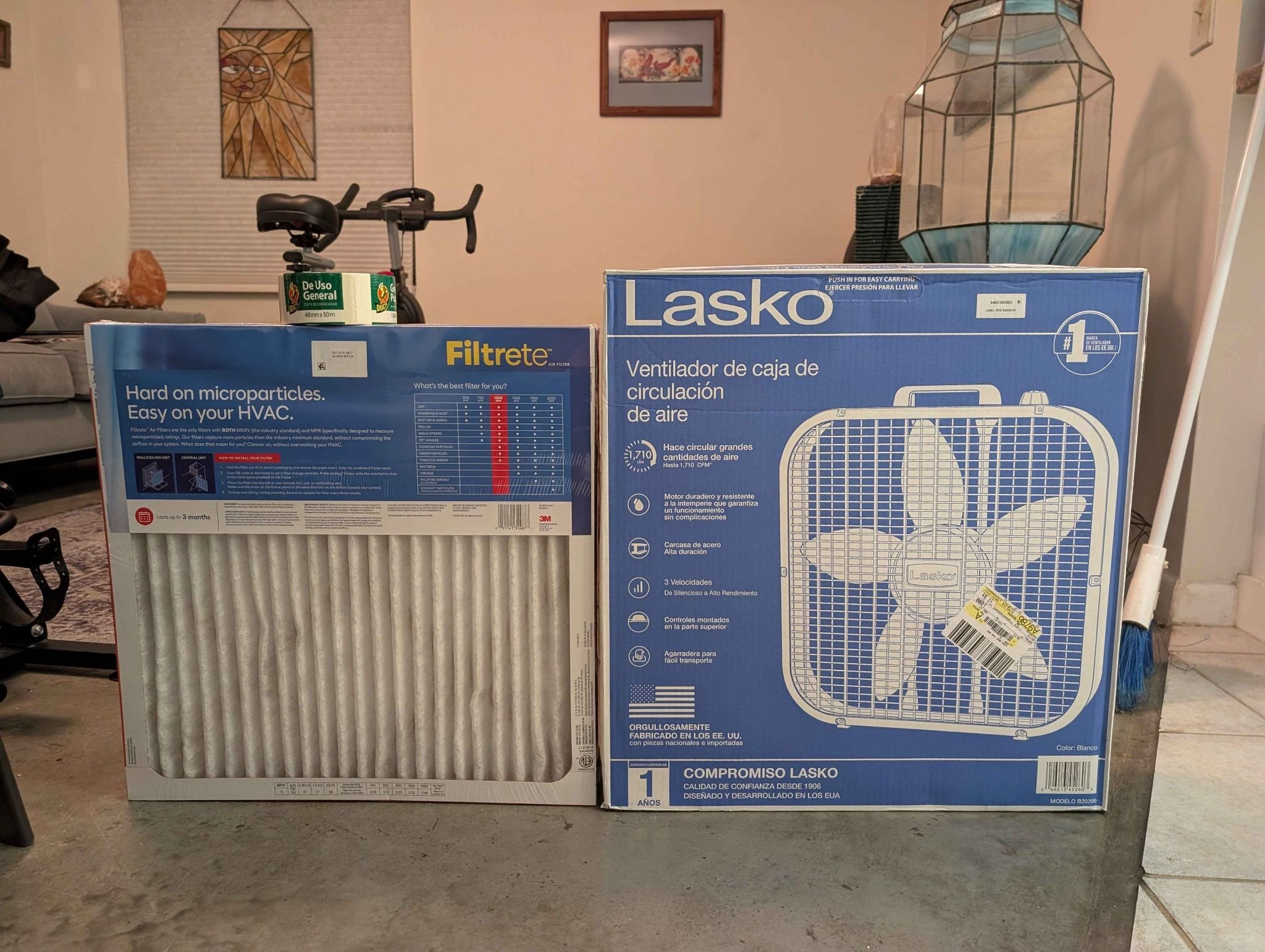
Building one of these purifiers is a straightforward process involving minimal materials, such as duct tape, filters, a box fan, and a piece of cardboard for the base. By creating a pressurized box, the design allows the fan to draw air through the filters and exhaust clean air back into the room, significantly reducing the concentration of dust, smoke, and allergens.
This DIY approach highlights a growing trend of democratizing public health tools through open-source knowledge and affordable components. While commercial units offer sleek designs and automated sensors, the home-built box serves as a functional, high-performance method to improve indoor environments on a budget.
Key Takeaways
- The DIY 'Corsi-Rosenthal box' is a highly efficient, low-cost alternative to commercial air purifiers.
- Building a DIY unit requires only basic materials like a box fan, MERV-13 filters, and tape.
- DIY air purifiers are effective tools for managing indoor air quality during wildfire season or illness outbreaks.
Clean Air Is A Human Right
- The DIY air filter movement exposes how corporate interests overprice basic health infrastructure.
- Access to clean air should not depend on your income, contrasting with conservative indifference to public health.
- Climate change-driven wildfires make these tools essential, highlighting the urgent need for federal climate action.
- Community-based health solutions are vital when state-level environmental protections fail to curb industrial pollution.
- We must move beyond individual DIY fixes and demand systemic regulations to stop air quality degradation at the source.
- Environmental justice requires that marginalized communities have tools to combat the air pollution conservatives often overlook.
🔑 Liberal Key Points
- DIY air filters are a grassroots victory for public health accessibility.
- Individual solutions are necessary, but collective policy action against polluters is the ultimate goal.
- Support community health initiatives while advocating for stronger EPA enforcement.
Self-Reliance Over Big Government Mandates
- This project celebrates American ingenuity and private solutions over top-down government mandates.
- Individuals taking responsibility for their own air quality is the hallmark of a free, self-reliant society.
- Market competition for filters ensures high-quality components remain affordable without federal subsidies or interference.
- We reject the alarmist rhetoric that requires expensive government bureaucracy to solve everyday home problems.
- DIY projects empower citizens, proving we don't need federal agencies to regulate every aspect of our lives.
- Free-market innovation produces affordable tools like the box fan, which conservatives support over costly 'green' schemes.
🔑 Conservative Key Points
- Personal responsibility and private innovation always beat government oversight.
- Empower yourself with practical tools rather than waiting for bureaucratic solutions.
- Keep air filtration decentralized and free from unnecessary government regulations.
Summary
Indoor air quality has become a significant concern in recent years, driven by wildfire smoke, pollutants, and public health awareness. A DIY solution, often referred to as a Corsi-Rosenthal box, has gained popularity as a cost-effective alternative to expensive commercial air purifiers. These units typically utilize a standard box fan and four high-efficiency particulate air (HEPA) filters, taped together in a cube shape to maximize airflow and capture microscopic particles.
Building one of these purifiers is a straightforward process involving minimal materials, such as duct tape, filters, a box fan, and a piece of cardboard for the base. By creating a pressurized box, the design allows the fan to draw air through the filters and exhaust clean air back into the room, significantly reducing the concentration of dust, smoke, and allergens.
This DIY approach highlights a growing trend of democratizing public health tools through open-source knowledge and affordable components. While commercial units offer sleek designs and automated sensors, the home-built box serves as a functional, high-performance method to improve indoor environments on a budget.
Key Takeaways
- The DIY 'Corsi-Rosenthal box' is a highly efficient, low-cost alternative to commercial air purifiers.
- Building a DIY unit requires only basic materials like a box fan, MERV-13 filters, and tape.
- DIY air purifiers are effective tools for managing indoor air quality during wildfire season or illness outbreaks.