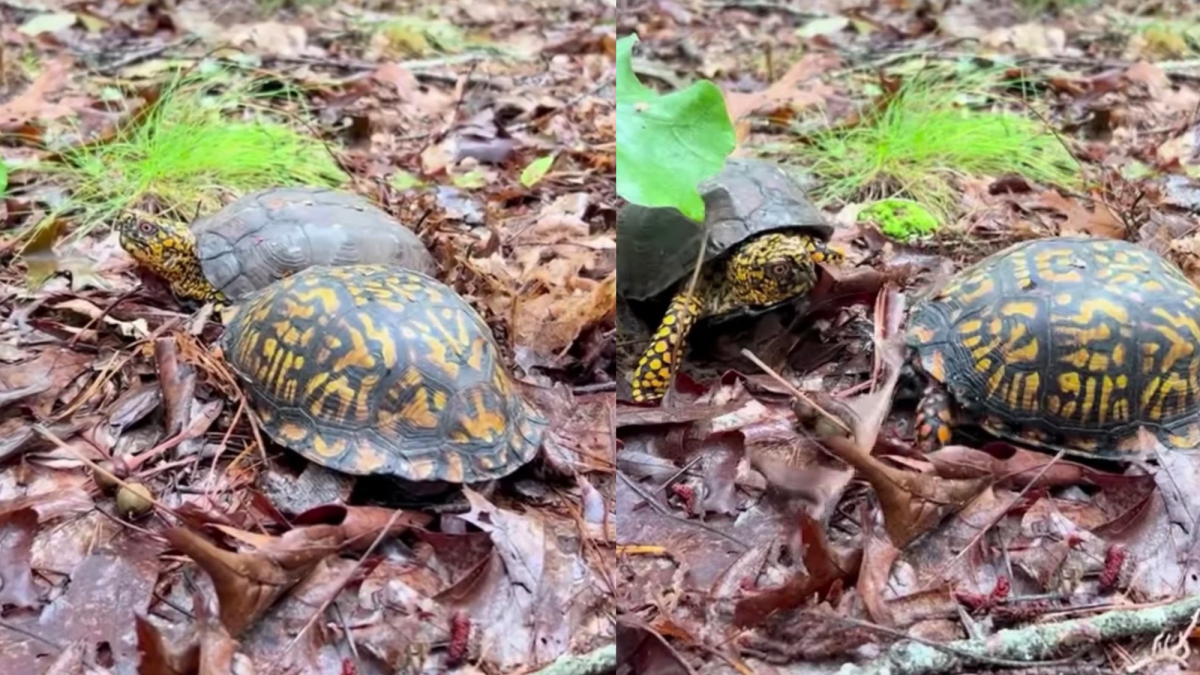
Fierce turtles square off in a rare woodland turf battle
Step aside, Teenage Mutant Ninja Turtles. The post Fierce turtles square off in a rare woodland turf battle appeared first on Popular Science.
By Popular Science·Nov 1, 2026


Summary
A recently surfaced video has captured a rare and aggressive encounter between two wood turtles, shedding light on the territorial behaviors of these reptiles. The footage depicts the turtles engaging in a physical confrontation, which researchers note is an unusual sight as these creatures typically avoid overt conflict.
Wood turtles are currently classified as vulnerable across much of their habitat due to environmental pressures and human encroachment. Biologists observe that while these turtles are generally docile, they will protect their immediate territory when resources or reproductive opportunities are at stake.
This discovery provides valuable data for conservationists looking to better understand the behavioral ecology of declining species. By studying these interactions, experts hope to implement better land-management strategies that prioritize the preservation of essential turtle habitats.
Key Takeaways
- Wood turtles exhibit complex territorial behavior when pressured.
- Habitat fragmentation is a major threat to vulnerable turtle species.
- New behavioral observations are critical for effective wildlife conservation.
Protecting Biodiversity from Human Encroachment
- We must expand protected land corridors to prevent habitat fragmentation that forces turtles into aggressive territorial disputes.
- Conservatives ignore the reality that climate change-induced habitat loss directly leads to animal displacement and conflict.
- Federal environmental protections under the Endangered Species Act are essential to prevent further declines in vulnerable populations like the wood turtle.
- We must reject corporate development interests that prioritize short-term profit over the preservation of vital ecosystems.
- Environmental justice requires us to act as stewards of the environment, not exploiters of dwindling natural resources.
- Scientific research funding is non-negotiable for understanding how to mitigate the human impact on fragile biodiversity.
🔑 Liberal Key Points
- Development must be secondary to ecological health.
- Scientific research is the foundation of effective environmental policy.
- Protecting species is a moral imperative in the face of human-driven climate change.
Preserving Nature Through Wise Stewardship
- True conservation is best achieved through local property-owner initiatives rather than federal bureaucratic overreach.
- Liberals use environmental narratives to push for land-use restrictions that stifle economic growth and private property rights.
- Focusing on the 'vulnerability' of a species should not be used as a pretense to halt critical infrastructure or energy projects.
- The free market, through voluntary conservation easements, has a better track record than government mandates for species protection.
- We must balance wildlife preservation with the necessity of job-creating development and regional prosperity.
- Environmental alarmism often overlooks the adaptability of species to their natural, changing environments.
🔑 Conservative Key Points
- Local oversight is superior to top-down government mandates.
- Economic development and wildlife protection can coexist without heavy-handed regulation.
- Property rights must be respected in all conservation efforts.
Summary
A recently surfaced video has captured a rare and aggressive encounter between two wood turtles, shedding light on the territorial behaviors of these reptiles. The footage depicts the turtles engaging in a physical confrontation, which researchers note is an unusual sight as these creatures typically avoid overt conflict.
Wood turtles are currently classified as vulnerable across much of their habitat due to environmental pressures and human encroachment. Biologists observe that while these turtles are generally docile, they will protect their immediate territory when resources or reproductive opportunities are at stake.
This discovery provides valuable data for conservationists looking to better understand the behavioral ecology of declining species. By studying these interactions, experts hope to implement better land-management strategies that prioritize the preservation of essential turtle habitats.
Key Takeaways
- Wood turtles exhibit complex territorial behavior when pressured.
- Habitat fragmentation is a major threat to vulnerable turtle species.
- New behavioral observations are critical for effective wildlife conservation.